
Baby Blues vs. Postpartum Depression: Understanding the Difference
Bringing a new baby home is supposed to feel like the happiest time of your life, and yet you're crying in the shower, snapping at your partner, and wondering what's wrong with you. If this sounds familiar, you are not alone, and you are not broken.
Many new mothers experience emotional difficulty after giving birth. But there's an important difference between the normal hormonal adjustment known as the baby blues and the more serious condition called postpartum depression (PPD). Knowing the difference can help you get the right support at the right time.

What Are the Baby Blues?
The baby blues are a short-term emotional response to the dramatic hormonal changes that happen after childbirth. Estrogen and progesterone levels plummet within hours of delivery, and this chemical shift, combined with sleep deprivation, physical recovery, and the overwhelming reality of new parenthood, can leave you feeling emotionally raw.
Common baby blues symptoms include:
Mood swings that shift quickly from joy to tears
Unexplained crying or weepiness
Irritability or anxiety
Difficulty sleeping even when the baby sleeps
Feeling overwhelmed or uncertain
Timeline: The baby blues typically begin within two to five days after delivery and resolve on their own within two weeks. Rest, support from loved ones, and time are usually enough. No medical treatment is needed.
What Is Postpartum Depression?
Postpartum depression is a clinical mood disorder that goes beyond the normal adjustment period after childbirth. It affects approximately 1 in 7 new mothers and can also affect fathers and non-birthing partners, though it is most commonly discussed in the context of mothers.
Unlike the baby blues, postpartum depression does not resolve on its own within two weeks. It can begin anytime in the first year after birth, not just in the first days, and it significantly impacts a person's ability to function and care for themselves and their baby.
Postpartum Depression Symptoms: What to Watch For
Recognizing postpartum depression symptoms is the first step toward getting help. Many women miss the signs because they don't match the stereotypical image of depression. PPD can look very different from person to person.When OCD and depression occur together, symptoms may include:
Physical symptoms
Extreme fatigue that sleep doesn't fix
Changes in appetite, eating far too much or too little
Difficulty concentrating or making decisions
Headaches, stomachaches, or unexplained physical complaints
Muscle tension or body aches without a clear physical cause
Heart racing or chest tightness, especially during moments of anxiety
Getting sick more often, as chronic stress weakens the immune system
Emotional Symptoms
Persistent sadness or feeling empty
Overwhelming anxiety or worry that won't turn off
Anger, irritability, or rage that feels out of proportion
Feeling detached from your baby or going through the motions
Loss of interest in things you used to enjoy
Feelings of guilt, shame, or worthlessness
Thoughts that your baby would be better off without you
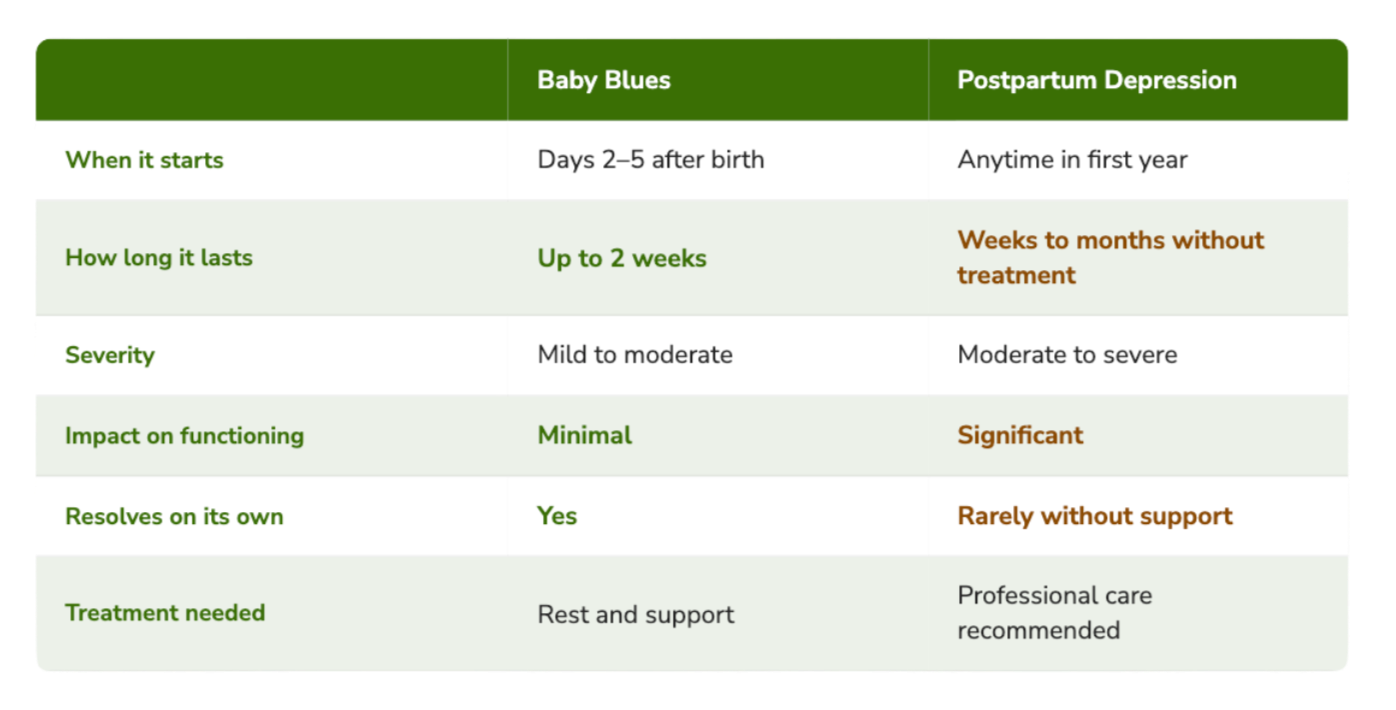
Baby Blues vs. Postpartum Depression: Key Differences
Although both conditions can cause mood changes, sadness, and emotional overwhelm after childbirth, postpartum depression is more severe and lasts longer than the baby blues. Recognizing the signs early can help mothers get the support and postpartum depression treatment they need to feel better and regain their emotional well-being.
When to Seek Help
You don't have to be in crisis to ask for help. If any of the following apply to you, reach out to a mental health professional.
Your low mood or anxiety has lasted more than two weeks
You feel disconnected from your baby most of the time
You're struggling to complete daily tasks or care for yourself
You're having scary or intrusive thoughts
You feel like you're not yourself and don't know when that will change
Untreated postpartum depression doesn't just affect the mother. Research consistently shows it can impact infant bonding, child development, and relationship health. Getting treatment is one of the most important things you can do for your whole family.

Postpartum Depression Treatment Options
The good news: postpartum depression treatment is effective. Most people who receive appropriate care experience significant improvement. Treatment is not one-size-fits-all, and a qualified provider will help you find the approach that's right for you.
Postpartum depression therapy gives you a structured, supportive space to understand what you're experiencing and develop tools to manage it. Working with a therapist who specializes in perinatal mental health means working with someone who understands the specific emotional terrain of new parenthood: the identity shifts, the grief alongside joy, the pressure to perform happiness.
Postpartum Depression Cognitive Behavioral Therapy (CBT):Cognitive behavioral therapy is one of the most well-researched and effective treatments for postpartum depression. CBT works by helping you identify and restructure the thought patterns that are fueling your depression and anxiety.
Interpersonal Therapy (IPT): Focuses on relationship transitions and communication, particularly effective given that PPD often strains partnerships and support systems.
EMDR: For mothers whose PPD is connected to a traumatic birth experience, EMDR can be a powerful complement to other treatment.
At Mud Hook Mental Health, we specialize in supporting people through the hard seasons of life, including the ones that are supposed to be joyful. Our therapists are experienced in postpartum depression therapy, including cognitive behavioral therapy and other evidence-based approaches. We'll meet you where you are.

You Are Not Alone
The gap between the baby blues and postpartum depression is real, and knowing which side of that line you're on matters. Baby blues are temporary. Postpartum depression is treatable. Neither one makes you a bad mother.
If something feels off, trust that instinct. Reaching out is the bravest thing you can do, for yourself and for your baby. Schedule an appointment with Mud Hook Mental Health in Garland, TX today.